
WestJet flight attendants strike, forcing hundreds of flight cancellations
The union says unpaid ground work is a central sticking point in negotiations

Editorial team
Published Aug 2, 2026
Updated Wednesday, September 9, 2026 - 4:30 AMSep 9, 2026, 4:30 AM
The brief
What to know
- A flight-attendant work stoppage caused cancellations and passenger disruption.
- WestJet and CUPE later announced a tentative agreement intended to end further disruption.
- Operational recovery could still take time after an agreement because aircraft and crews must be repositioned.
Why it matters
For travelers, a labor settlement does not instantly restore a schedule; rebooking rights and airline communications remain important during the recovery.
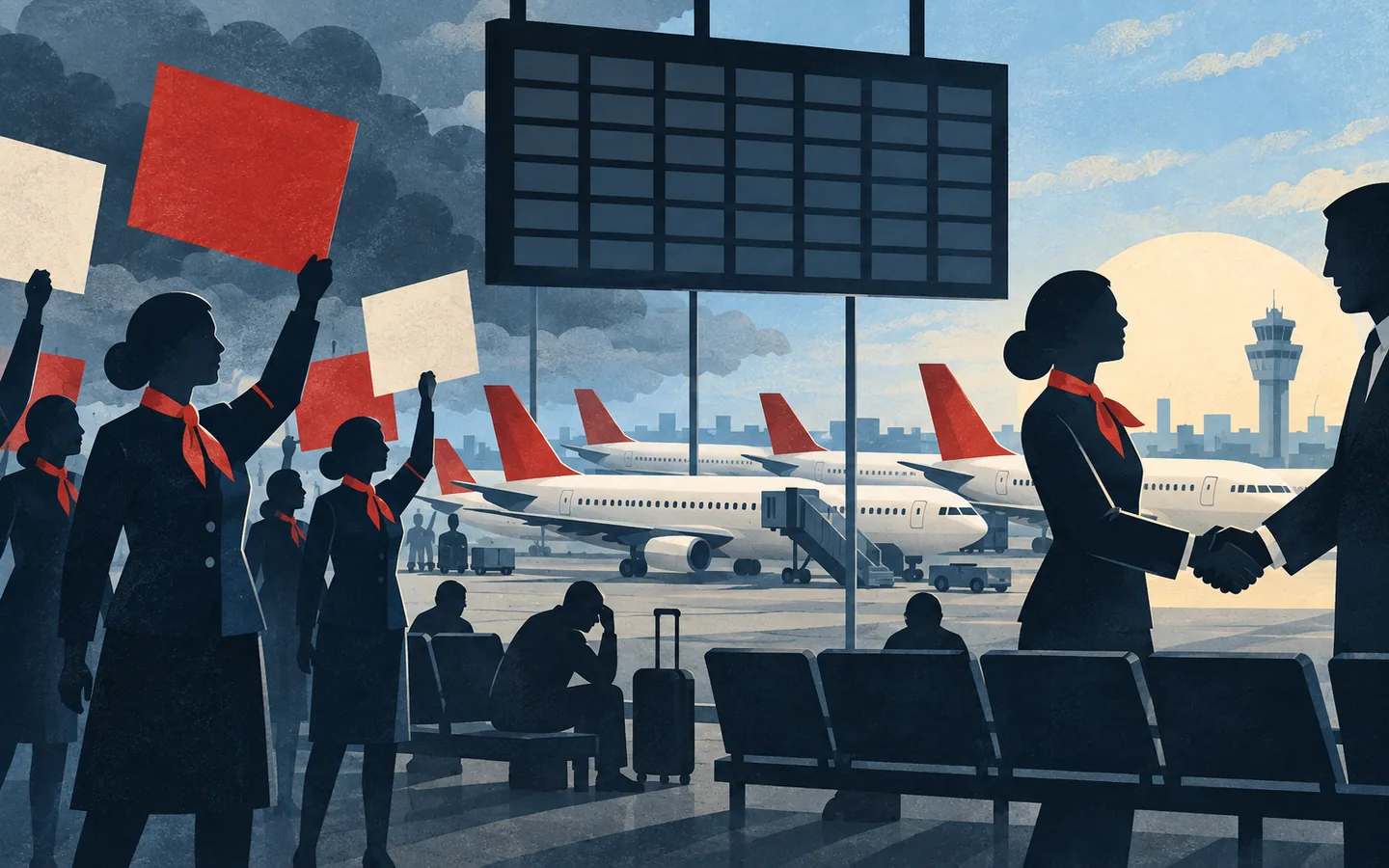
Roughly 4,400 WestJet flight attendants walked off the job in the early hours of August 2, grounding hundreds of flights over a long summer weekend after contract talks between the airline and the Canadian Union of Public Employees broke down.
Why they walked out
CUPE Local 8125, which represents the cabin crew, issued a 72-hour strike notice on July 30 after ten months of negotiations, and WestJet responded with a matching 72-hour lockout notice the same day. The union said members perform roughly 35 hours of unpaid work each month under the airline's existing credit-hour pay system, which does not fully compensate flight attendants for time spent boarding passengers or waiting through ground delays. "We tried until the very last minute to get a fair deal that recognizes the value of the work cabin crews do. WestJet's offer did not go far enough," CUPE Local 8125 president Alia Hussain said in announcing the walkout, which had been backed by a 99.4% strike mandate from union members. WestJet said it canceled roughly 600 flights over the course of the disruption, affecting some 250,000 travelers during the August long weekend.
The deal that ended it
WestJet and CUPE reached a tentative agreement early on August 3, less than two days after the walkout began, though cancellations continued for a time as the airline worked to restore its schedule; more than 300 flights, or about 62% of those scheduled, were still canceled the day the deal was announced. The agreement includes a cumulative wage increase of 20.5% over four years, including a one-time 13% raise retroactive to January 1, 2026, along with a new "duty pay premium" worth roughly another 12% of salary that compensates flight attendants for time spent on ground duties, a $300 annual health spending account and a 13% increase to meal per diem rates in 2026. "This tentative agreement represents meaningful progress," Hussain said. "It evolves the flight credit system by recognizing more of the work cabin crew are required to perform." The deal still requires ratification by WestJet's cabin crew before taking full effect.
Part of a broader pattern in aviation labor
The dispute echoes a similar fight a year earlier at Air Canada, the country's largest airline, where flight attendants struck in August 2025 over nearly identical concerns about unpaid ground work. That dispute ended with a tentative deal that 99.1% of Air Canada's flight attendants went on to reject, before an arbitrator ultimately set the contract's terms in February 2026, largely along the lines of the rejected offer. The back-to-back disputes have added to a wave of contract negotiations across the airline industry this year, as ground staff and cabin crews at carriers in multiple countries press for better pay and working conditions following several years of strong industry profitability.
Transparency
Sources & reading notes
This source-based article combines dated company or regulatory material with editorial context. Company claims are identified as such, and subsequent filings may change the picture.
Spot something that needs attention? Review our corrections process.