
Mortgage rates hold in the mid-6% range as bond market stays volatile
Freddie Mac forecasts rates will stay elevated through the rest of 2026

Editorial team
Published
Updated
The brief
What to know
- Average mortgage rates remained in the mid-6% range at the time of publication.
- Daily borrower quotes varied with Treasury yields, credit profile, fees and loan structure.
- A small headline-rate change can be outweighed by points, closing costs or the length of ownership.
Why it matters
Homebuyers need a same-day, like-for-like loan estimate rather than treating a national weekly average as the rate they will receive.
Mortgage rates have held in the mid-6% range through much of August, with the average 30-year fixed rate ticking down slightly to around 6.6% even as broader bond market volatility keeps a clear direction for rates hard to pin down.
A brief dip from a Treasury move
The dip came after the Treasury Department said it would increase its buyback of long-term bonds in an effort to stabilize the bond market and boost liquidity, a move that briefly pushed 10-year Treasury note yields lower. Mortgage rates, which tend to track those yields closely, eased in response, though the effect proved short-lived against the backdrop of a bond market still absorbing the fallout from the Federal Reserve's contentious July meeting, when the 30-year Treasury yield briefly topped 5.2%, its highest level since 2007, after three regional Fed presidents dissented in favor of a rate hike.
Competing pressures on rates
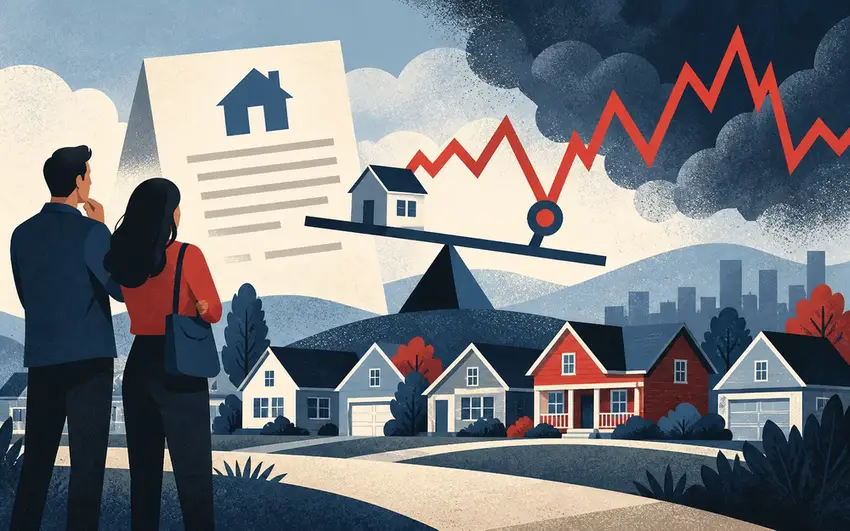
Housing economists describe the current environment as a tug of war between softer housing data, which would typically pull rates lower, and elevated long-term Treasury yields driven by concerns over government deficits, inflation and broader economic uncertainty. Ongoing tension in the Middle East has also continued to affect energy prices, adding another layer of volatility to the bond market even as diplomatic progress on reopening the Strait of Hormuz has periodically eased those pressures.
The outlook for the rest of 2026
Government-backed mortgage buyer Freddie Mac has revised its forecast higher, now projecting that the 30-year fixed rate will reach roughly 6.8% by the end of the year and remain in a similar range through 2027, a notable jump from its outlook just a month earlier. Purchase mortgage volume has slowed as a result, even as housing inventory has grown slightly and affordability has improved modestly compared with a year ago. Separately, New York Fed data released this month showed mortgage balances actually declined by $74 billion in the second quarter to $13.1 trillion, even as other categories of household debt, including auto loans and credit cards, continued to climb, a divergence economists attribute in part to elevated rates keeping would-be sellers locked into older, cheaper mortgages rather than listing their homes.
Transparency
Sources & reading notes
This source-based article explains a dated market or household-finance development. It is general information, not individualized financial advice; rates, prices and reported totals change.
Spot something that needs attention? Review our corrections process · Source methodology · Right of reply.
More in Finance

Finance. Gold hits three-month high as Treasury boosts bond buyback program
Gold climbed to its highest level in roughly three months after the Treasury Department unexpectedly expanded its long-term bond buyback program, extending a rally fueled by a softer dollar, persistent inflation and Middle East tensions, though the metal remains well off the record highs it set earlier in the year.
News Editors · Aug 25, 2026Money note

Finance. Nasdaq gains as chip stocks rally ahead of Nvidia earnings
The Nasdaq Composite led U.S. markets higher as semiconductor stocks rallied and Treasury yields fell for a second straight session, with investors positioning ahead of Nvidia's closely watched earnings report and weighing a weaker consumer confidence reading and a worsening U.S.-Canada trade dispute.
News Editors · Aug 24, 2026Money note

Finance. Credit card debt approaches record as delinquency data draws new scrutiny
U.S. credit card balances climbed to $1.26 trillion in the second quarter, nearing last year's record, even as total household debt edged down slightly, according to the New York Fed, which says the pattern reflects a 'K-shaped economy' in which roughly 60% of the 175 million Americans with cards carry ongoing balances.
News Editors · Aug 11, 2026Money note

Finance. Dow closes above 54,000 for the first time as earnings season impresses
The Dow Jones Industrial Average closed above 54,000 for the first time and the S&P 500 notched its first record close in two months, powered by a 29.5% surge in Palantir shares and a strong Caterpillar earnings beat, as falling oil prices reflected optimism over reopening the Strait of Hormuz.
News Editors · Aug 4, 2026Money note