
Education Department reversal of loan-forgiveness credits confuses borrowers
Some public-service borrowers say their qualifying payment counts unexpectedly dropped

Editorial team
Published Aug 18, 2026
Updated Wednesday, September 9, 2026 - 4:30 AMSep 9, 2026, 4:30 AM
The brief
What to know
- Some borrowers saw qualifying-payment counts fall after account adjustments.
- The Education Department described at least some reversals as intentional corrections to prior coding.
- Public Service Loan Forgiveness normally requires 120 qualifying payments and complete employment records.
Why it matters
A changed payment count can alter a borrower's forgiveness timeline, making documentation and a clear appeal path consequential rather than merely administrative.
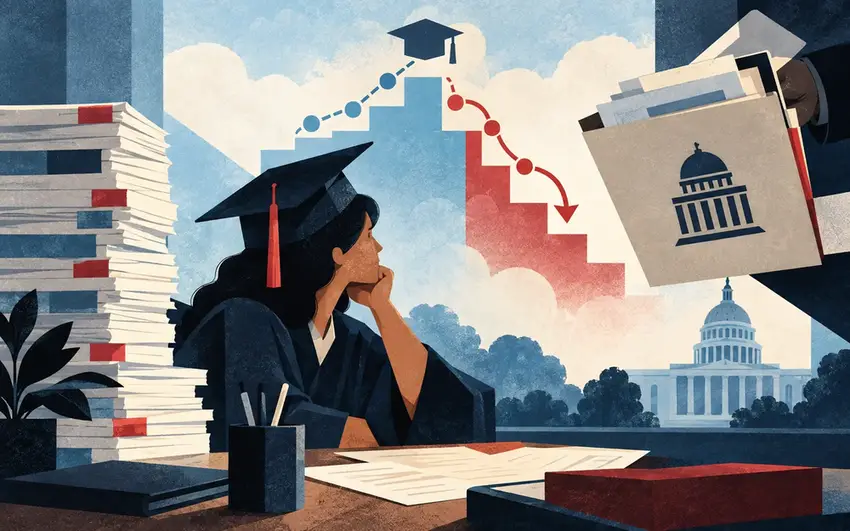
Borrowers chasing Public Service Loan Forgiveness have spent recent weeks watching their qualifying payment counts move in the wrong direction, sometimes losing six months of progress or more without warning, a phone call or an explanation. The Education Department has now confirmed that some of those reversals were intentional, part of an effort to correct what it calls coding errors made under the prior administration.
What changed for borrowers
Public Service Loan Forgiveness, created in 2007, cancels the remaining federal debt of government and nonprofit workers after 120 qualifying monthly payments, roughly ten years. Borrowers track their progress on StudentAid.gov, and for years that number generally moved in one direction: up. In recent weeks, an unknown number of borrowers, including teachers and nurses, have watched their counts drop instead, pushing back the date they expected to become debt-free.
The department's explanation
A department spokesperson said the agency is correcting what it described as multiple PSLF counter code errors stemming from changes made in May 2024 under the Biden administration, which had offered borrowers a chance to have their payment counts reconsidered and to receive credit for certain periods, including some payment pauses, that previously didn't count. The department has not said how many borrower accounts are affected, or provided a detailed accounting of which specific periods were reversed and why.
Three overlapping glitches
Borrower advocates say the confusion actually reflects at least three distinct, overlapping problems: some borrowers are not receiving credit for recent qualifying months at all; the department is deliberately reversing certain non-qualifying credits granted between 2024 and 2026, including months spent on repayment plans, such as the Extended or Graduated plans, that generally don't count toward PSLF in the first place; and a separate, apparently unrelated system error has begun marking some genuinely qualifying payments as ineligible. Advocacy groups including Protect Borrowers and the American Federation of Teachers have warned the reversals could, in some cases, even reinstate loans that had already been fully forgiven, dragging public servants who completed their ten years of payments back into active repayment.
Part of a wider repayment overhaul
The reversals are unfolding alongside a broader overhaul of federal student loans that took effect July 1 under the One Big Beautiful Bill Act, which created a new Repayment Assistance Plan and began phasing out several older income-driven repayment options over the next two years. The same overhaul also eliminated the 15-day grace period that previously let a slightly late payment still count toward the 120-payment PSLF threshold; as of July 1, a payment made even one day after its due date now costs a borrower an entire month of credit. Financial aid experts say the combination of shifting rules and unexplained credit reversals has left many borrowers uncertain not just how close they are to forgiveness, but which rules now even apply to their loans.
Transparency
Sources & reading notes
This source-based article summarizes dated material available at publication; it is not live reporting. Figures and official assessments may change, so follow the linked records for later updates.
Spot something that needs attention? Review our corrections process.