
Nepal-Tibet border flood: what is known and what remains uncertain
Later official figures sharply raised the toll after the Bhote Koshi disaster, while access and communications complicated the count

Editorial team
Published Aug 27, 2026
Updated Wednesday, September 9, 2026 - 4:30 AMSep 9, 2026, 4:30 AM
The brief
What to know
- A destructive surge traveled through the Bhote Koshi corridor after a high-mountain slope failure and river blockage.
- By September 7, Nepal's disaster agency reported more than 1,300 deaths and roughly 5,000 people missing, according to the Associated Press.
- Early totals changed rapidly because roads, communications and access to remote communities were disrupted.
Why it matters
The scale of the loss and the difficulty of establishing a reliable count show why fast-moving disaster figures must be dated, sourced and treated as provisional.
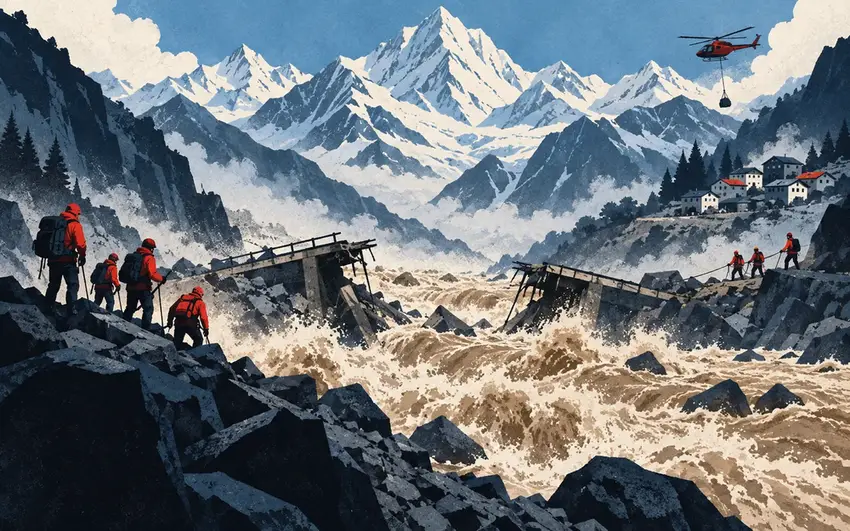
A destructive flood moved through the Bhote Koshi border corridor on August 26 after a high-mountain slope failure and temporary river blockage. The surge damaged transport links, settlements and energy infrastructure in difficult terrain. Early official counts were incomplete because roads and communications were cut.
How the event unfolded
Reports from the first days described a mass of ice and rock entering a tributary above the border corridor, temporarily holding back water before a surge traveled downstream. Precise attribution in a remote high-altitude catchment takes time: satellite analysis, field access and hydrological records all contribute, and early explanations should not be treated as a final scientific assessment.
Why the numbers changed
On August 27, authorities were reporting at least 390 deaths and about 1,400 people missing across affected areas. By September 7, Nepal's disaster management agency said more than 1,300 people had died and roughly 5,000 were missing, according to the Associated Press. The later figures supersede the headline counts in the first version of this post.
A missing-person total is not the same as a confirmed death toll. Displaced residents, damaged phone networks and incomplete local registers can all enlarge the number of people who are temporarily unaccounted for. The figures should therefore be read with their dates and sources attached.
The longer recovery
Immediate work centered on rescue, shelter, medical care and restoring access. Recovery also raises longer questions about bridge design, warning systems and development in narrow valleys exposed to landslides and glacial hazards. Nepal's government issued an international relief appeal, while health authorities published response updates for affected districts.
This post was updated on September 9 to replace early casualty estimates with later figures and to make the uncertainty around missing-person counts explicit. The linked official notices and subsequent assessments should be consulted for further changes.
Transparency
Sources & reading notes
This source-based article summarizes dated material available at publication; it is not live reporting. Figures and official assessments may change, so follow the linked records for later updates.
Spot something that needs attention? Review our corrections process.